4.6
34 verified reviews
About
Barcelona isn’t all Gaudí curves and overpriced tapas in the Gothic Quarter. Sometimes, the city is a cold, hard, industrial slap in the face, and nowhere is that more evident than the Muelle Adosado. This isn’t a place for the faint of heart or those who blister at the first sign of a long walk. This is the Entrada espigón—the gateway to the breakwater—where the city’s maritime muscle flexes its heavy, diesel-scented arms. It is the literal end of the road, a place where the asphalt gives way to the Mediterranean and the massive, floating apartment blocks we call cruise ships loom over you like prehistoric gods.
To get here, you have to want it. You’re leaving the polished veneer of the Port Vell behind, trekking past the endless rows of shipping containers and the sterile, glass-and-steel cruise terminals. It’s a landscape of logistics, a world of cranes and customs officials. But once you reach the entrance to the espigón, the atmosphere shifts. The roar of the city fades, replaced by the rhythmic slap of the sea against the concrete tetrapods and the low, vibrating hum of ship engines that never truly sleep. It’s ugly-beautiful in the way only a working port can be.
This is the best ship spotting in Barcelona, hands down. If you’ve ever wanted to feel small—truly, insignificantly small—stand here when one of the giants from Royal Caribbean or MSC is pulling out of Terminal A. These things aren't boats; they are steel islands, blotting out the sun as they maneuver with surprising grace toward the open sea. You’ll see the ship nerds here, the ones with the three-foot-long camera lenses, waiting for that perfect shot of a hull cutting through the wake. They know the schedule better than the port authority does.
But it’s not just about the ships. Look the other way, and you’ll see the fishermen. These guys are the real deal—leathery skin, weathered hats, and a level of patience that borders on the divine. They don’t care about the ten-thousand-ton vessel departing behind them; they’re focused on the tip of a rod, waiting for a sea bass or a bream to lose its mind. There’s a strange, silent respect between the industrial scale of the port and the ancient, solitary act of fishing. It’s a reminder that despite the millions of tourists passing through these terminals every year, the sea still belongs to those who work it.
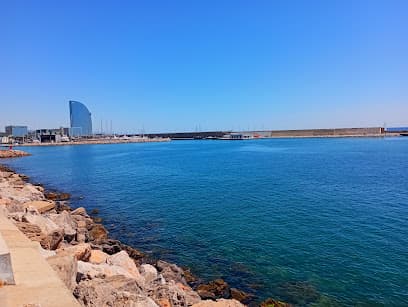
The views from here are honest. You aren't looking at a postcard; you're looking at the guts of the city. You see the W Hotel standing like a glass sail in the distance, the silhouette of Montjuïc rising up with its fortress guarding the harbor, and the Sagrada Família poking its stony fingers into the sky. It’s a perspective of Barcelona that most people never see because they’re too busy fighting for space on the Rambla.
Is it worth the trek? If you’re looking for a café con leche and a comfortable place to sit, absolutely not. There is no shade, the wind can be brutal, and the smell of heavy fuel oil is a constant companion. But if you want to see where the city meets the world, where the grit of industry meets the infinite blue of the Mediterranean, then yes. It’s a place to think, to breathe in the salt, and to realize that the world is much, much bigger than your hotel room. It’s the kind of place where you can feel the pulse of a city that has lived and died by its harbor for two thousand years.
Type
Tourist attraction
Duration
1 hour
Best Time
Late afternoon for sunset views over the city and to watch the cruise ships depart.
What People Say
port(4)sea(2)
Features
Tourist attraction
Categories
MaritimeIndustrialPhotographyFishing
Ticket Prices
Free Admission
No tickets required
Opening Hours
- Monday9 AM to 9 PM
- Tuesday9 AM to 9 PM
- Wednesday9 AM to 9 PM
- Thursday9 AM to 9 PM
- Friday9 AM to 9 PM
- Saturday9 AM to 9 PM
- Sunday9 AM to 9 PM
Must-See Highlights
The departure of the mega-cruise ships
The panoramic view of the W Hotel and Barceloneta
The local fishermen at the edge of the breakwater
Visitor Tips
Bring a windbreaker as the breeze off the sea can be surprisingly cold even in summer.
Check the cruise schedule online to time your visit with ship arrivals or departures.
Wear comfortable walking shoes; the distances in the port are deceptive.
Good For
Ship enthusiastsPhotographersSolitude seekersBudget travelers
Why Visit
Unrivaled proximity to the world's largest cruise ships
A raw, industrial perspective of the Barcelona skyline
A quiet escape for fishing and contemplation away from the city center
Nearby Landmarks
- Cruise Terminal A (5-minute walk)
- World Trade Center Barcelona (25-minute walk/10-minute bus)
- Montjuïc Hill (visible across the harbor)
- Port Vell (50-minute walk)
Accessibility
- Flat paved surfaces
- Accessible via the Portbus
- No specialized facilities
Location
Sants-Montjuïc, Barcelona
Nearby Hotels
In Sants-Montjuïc
ATTRACTION
Bolets1
Sants-Montjuïc
A gritty, earthy temple to the Catalan obsession with wild mushrooms, where the dirt is real, the fungi are seasonal gold, and the air smells like the damp floor of a Pyrenean forest.
0.0(0)
Tourist attraction
ATTRACTION
Montjuic aparca
Sants-Montjuïc
The unglamorous base camp for your Montjuïc assault. A tactical slab of asphalt where the city's chaos fades into the pine-scented ghosts of the 1992 Olympics.
0.0(0)
Tourist attraction
ATTRACTION
Паркінг Барселона
Sants-Montjuïc
A sprawling slab of industrial reality in the Zona Franca. No Gaudí here—just hot asphalt, diesel fumes, and the honest utility of a secure place to park your rig.
0.0(0)
Park
Frequently Asked Questions
Is Entrada espigón del Muelle Adosado worth visiting?
It is worth it only if you enjoy industrial landscapes, ship spotting, or seeking a quiet, desolate spot away from the crowds. It is not a traditional tourist park and offers no amenities.
How do I get to Muelle Adosado?
The easiest way is to take the 'Cruise Bus' (Portbus) from the World Trade Center/Columbus Monument area, or it is a long, 30-40 minute walk through the port area.
Can you see the cruise ships clearly from here?
Yes, this is the primary docking area for Barcelona's largest cruise ships, providing an up-close view of the vessels at Terminals A, B, C, D, and E.
Are there any facilities like toilets or cafes?
No, this is a functional port area. There are no public toilets, cafes, or shops once you get past the main terminals, so bring your own water.
Reviews
0 reviews for Entrada espigón del Muelle Adosado
No reviews yet. Be the first to share your experience!