4.7
298 verified reviews
About
You’re standing on the edge of the world, or at least the edge of Barcelona, and it feels like a fever dream designed by a committee of Jesuits and carnival barkers. This is the Cumbre del Tibidabo, the highest point in the Serra de Collserola, and it is weird. Gloriously, unapologetically weird. It’s a place where you can light a candle for your sins in a massive stone basilica and then, thirty seconds later, strap yourself into a rickety red airplane that’s been swinging over the abyss since 1928.
Getting here is half the battle and most of the charm. You take the 'Cuca de Llum'—the Firefly—a sleek, modern funicular that replaced the old wooden bones of the previous century’s transport. It claws its way up the mountainside, leaving the smog and the noise of the city behind. When you spill out at the top, the first thing that hits you isn't the altitude; it’s the silence, followed immediately by the screaming of children on the Talaia, a giant metal arm that lifts you 550 meters above sea level just to see if you’ll blink.
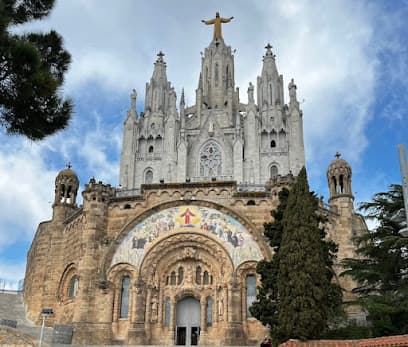
The centerpiece of this madness is the Temple Expiatori del Sagrat Cor. It looks like a neo-Gothic wedding cake topped with a bronze Christ who looks out over the Mediterranean with open arms. It took sixty years to build, and it shows. The crypt is dark, heavy, and smells of old stone and devotion. But take the elevator to the top—yes, there’s an elevator in the church—and you’ll find yourself on the terraces, standing at the feet of the giant statue. From here, Barcelona isn't a city; it’s a blueprint. You can see the grid of Eixample, the spires of the Sagrada Família looking like sandcastles, and the blue smudge of the sea. It’s a gut-punch view that makes the trek worth every cent.
Then there’s the amusement park. This isn't Disney. There are no plastic mice or corporate synergy here. It’s one of the oldest in the world, and it feels like it. The 'Avió'—that iconic red plane—is a replica of the first aircraft to fly from Madrid to Barcelona. It doesn't have an engine; it moves by the force of its own propeller. It’s terrifying in its simplicity. You sit in a tin can and spin over a cliff. It’s honest. It’s visceral. It’s exactly what a carnival should be.
If you have a soul, or at least a sense of the macabre, you’ll head to the Museu d'Autòmats. It’s a collection of late 19th and early 20th-century mechanical puppets. They are creepy, beautiful, and strangely moving. Walt Disney once tried to buy the whole collection with a blank check. The Catalans told him to kick rocks. That tells you everything you need to know about this place. It’s not for sale, and it’s not trying to be anything other than what it is: a mountain of contradictions.
Is it a tourist trap? Parts of it, sure. The food is overpriced and mostly forgettable—stick to a bag of churros and save your appetite for the city below. The crowds can be thick on weekends, and the wind up here will bite you even in July. But there is a strange energy here that you won't find at the beach or on the Rambla. It’s the result of a city that decided to put its most sacred church and its silliest rides on the same peak, just to see what would happen. It’s the Catalan spirit laid bare: pious, playful, and slightly dangerous.
Type
Tourist attraction
Duration
3-5 hours
Best Time
Late afternoon for sunset views over the city.
What People Say
theme park(14)elevator(8)price(5)funicular(3)cathedral(3)disfrutar(3)recreation(3)ideal(3)
Features
Tourist attraction
Categories
Amusement ParkChurchViewpointArchitecture
Ticket Prices
adult€35.00 (Full Park)
child€10.30 (Under 120cm)
senior€10.50 (Over 60s)
Must-See Highlights
The Avió (1928 red airplane ride)
The elevator to the top of Sagrat Cor
The Automata Museum
The Talaia (bucket lift) for extreme height views
Visitor Tips
Bring a light jacket even in summer as it is significantly cooler and windier at the summit.
If you only want the views, buy the 'Panoramic Area' ticket instead of the full park pass.
Check the park calendar before going, as the amusement rides are often closed on weekdays during off-peak seasons.
Good For
FamiliesPhotography enthusiastsHistory buffsCouples
Why Visit
The oldest functioning amusement park in Spain and one of the oldest in the world.
The highest viewpoint in Barcelona at 512 meters above sea level.
A unique juxtaposition of a major religious basilica and a vintage theme park.
Nearby Landmarks
- Torre de Collserola (15-minute walk)
- Fabra Observatory (20-minute walk)
- Parc de Collserola (Direct access from the summit)
Accessibility
- Funicular is wheelchair accessible
- Main level of the church is accessible
- Many park levels have elevators but some areas have steep slopes
Location
Cumbre del Tibidabo, 08035 Barcelona, Испания, Ctra. de Vallvidrera al Tibidabo, 111
Sarrià-Sant Gervasi, Barcelona
Nearby Hotels
Nearby Restaurants
In Sarrià-Sant Gervasi
ATTRACTION
Casa Narcís Bosch
Sarrià-Sant Gervasi
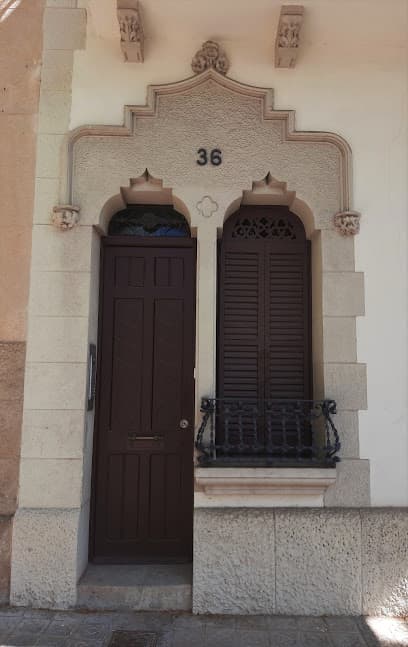
A Modernista fever dream tucked away in Sarrià, where Salvador Valeri i Pupurull’s stone curves and ironwork prove that Gaudí wasn't the only genius in town.
0.0(0)
Tourist attraction
ATTRACTION
Plaça de Calvó
Sarrià-Sant Gervasi
A quiet, unpretentious slice of Sant Gervasi where the only drama is a toddler losing a shoe. No Gaudí, no crowds, just trees, benches, and the sound of real life in the Zona Alta.
0.0(0)
Park
ATTRACTION
Pipican Piscines i Esports
Sarrià-Sant Gervasi
A dirt-caked arena of canine chaos set against the polished backdrop of Sarrià-Sant Gervasi, where the neighborhood’s elite and their four-legged shadows come to settle scores.
0.0(0)
Park
Frequently Asked Questions
Is Tibidabo worth visiting?
Yes, even if you don't like rides. The 'Panoramic Area' is free to walk around and offers the absolute best views of Barcelona, while the church is a masterpiece of neo-Gothic architecture.
How do I get to the top of Tibidabo?
Take the L7 train from Plaça de Catalunya to Av. Tibidabo, then the 196 bus to the funicular station, and finally the 'Cuca de Llum' funicular to the summit.
Do I need tickets for the church?
Entrance to the main basilica and the crypt is free, but you must pay a small fee (around €5) to take the elevator to the top terraces and the statue of Christ.
What is the best time to visit Tibidabo?
Go about two hours before sunset. You'll get the golden hour light for photos, see the city lights come on, and avoid the heaviest midday heat and crowds.
Reviews
0 reviews for Cumbre del Tibidabo
No reviews yet. Be the first to share your experience!