4.7
42,451 verified reviews
About
Most people come to Barcelona for the Gaudí curves, the overpriced ham on the Rambla, or the chance to get a sunburn on a crowded beach. They miss the real magic, which is often buried underground. CosmoCaixa isn't just a science museum; it’s a massive, subterranean cathedral dedicated to the how and the why of everything. Located up in the posh, quiet hills of Sarrià-Sant Gervasi, it’s housed in a stunning 1904 modernist building that used to be an asylum for the blind. But the real action happens in the massive glass-and-steel expansion that drops five stories into the earth.
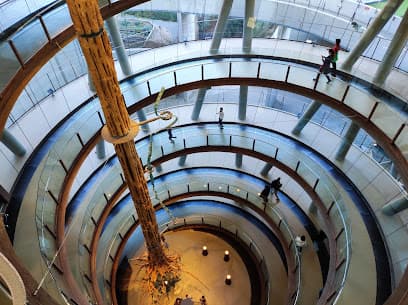
You enter and immediately face the 'Square of Science,' but the real descent begins on the spiral ramp. It winds around a massive Acariquara tree from the Amazon, pulling you down into the guts of the building. It’s a transition from the bright Mediterranean sun to something darker, cooler, and infinitely more interesting. This is one of the best science museums in Europe, not because it has the most screens, but because it has the most soul. It’s run by the 'la Caixa' Foundation, and for the price of a mediocre gin and tonic, you get access to a world that actually makes you feel small in the right way.
The centerpiece, the thing that stops everyone in their tracks, is the 'Bosc Inundat'—the Flooded Forest. They didn’t just put some plants in a room; they reconstructed over 1,000 square meters of Amazonian rainforest. You walk through a glass tunnel while massive pirarucus—prehistoric-looking fish the size of a grown man—glide over your head. The humidity hits you like a wet towel. There are caimans lurking in the shadows, birds flitting through the canopy, and the capybaras. These giant, semi-aquatic rodents are the undisputed kings of the place, sitting with a level of Zen-like indifference that we should all aspire to. When the simulated tropical rain starts to fall, hitting the glass roof with a rhythmic thrum, you forget you’re in Catalonia.
Then there’s the Geological Wall. It’s not a collection of pebbles; it’s seven massive sections of real rock—over 90 tons of it—showing the violent, slow-motion car crash of tectonic plates. You can see the folds, the faults, and the history of the planet written in stone. It’s visceral. It’s the kind of thing that makes you realize your daily anxieties are less than a blink in geological time. The Universe Gallery takes you from the Big Bang to the evolution of life, and unlike most museums where 'hands-on' means a broken joystick, the experiments here actually work. You can create a sandstorm, watch a Foucault pendulum prove the earth is spinning, or see how a tornado forms.
Is it for kids? Sure, they’ll lose their minds. But it’s really for anyone who hasn't had the curiosity beaten out of them by adulthood. It’s a place to feel wonder again. The Planetarium is top-tier, offering a 3D trip through the cosmos that’ll make your head spin. The whole place is a rebuke to the 'tourist trap' model of travel. It’s honest, it’s educational without being condescending, and it’s remarkably cheap. You’ll leave with a bit of Amazonian humidity in your clothes and a better understanding of the chaos that governs our lives. In a city that often feels like a theme park, CosmoCaixa is the real deal.
Type
Museum, Science museum
Duration
3-4 hours
Best Time
Weekday mornings right at opening (10:00 AM) to avoid school groups and have the Flooded Forest to yourself.
Guided Tours
Available
Audio Guide
Available
What People Say
planetarium(682)experiments(603)rainforest(232)aquarium(225)capybara(191)tropical forest(98)physical law(29)club super3(19)
Features
Museum
Science museum
Tourist attraction
Categories
ScienceNatureArchitectureFamily-Friendly
Ticket Prices
adult€6.00
childFree (under 16)
senior€6.00
Opening Hours
- Monday10 AM to 8 PM
- Tuesday10 AM to 8 PM
- Wednesday10 AM to 8 PM
- Thursday10 AM to 8 PM
- Friday10 AM to 8 PM
- Saturday10 AM to 8 PM
- Sunday10 AM to 8 PM
Must-See Highlights
The Flooded Forest (Bosc Inundat) to see the capybaras and giant pirarucu fish.
The Geological Wall showing seven massive sections of the Earth's crust.
The Universe Gallery for a hands-on journey from the Big Bang to modern robotics.
The Planetarium for immersive 3D astronomical shows.
The Acariquara tree in the center of the spiral entrance ramp.
Visitor Tips
If you are a CaixaBank customer, entry is usually free, but you still need to 'buy' a €0 ticket online.
The museum cafe is surprisingly decent and has a terrace with great views of the city.
Check the Planetarium schedule as soon as you arrive; shows are in different languages and require a separate (but cheap) ticket.
Don't miss the outdoor 'Science Square' for large-scale physical experiments.
Good For
Families with childrenScience enthusiastsArchitecture loversBudget travelersRainy days
Why Visit
The Bosc Inundat: A living, breathing 1,000sqm Amazonian ecosystem inside a museum.
Modernist Architecture: Housed in a stunning 1904 brick building with a massive, high-tech subterranean expansion.
Exceptional Value: One of the most affordable major attractions in the city, often costing less than a coffee and a pastry.
Nearby Landmarks
- Tibidabo Funicular (Lower Station) - 10-minute walk
- Torre Bellesguard (Gaudí) - 15-minute walk
- Tramvia Blau - 8-minute walk
- Mount Tibidabo - 15-minute bus ride
Accessibility
- Fully wheelchair accessible with ramps and elevators
- Adapted restrooms
- Braille signage in many areas
Location
Carrer d'Isaac Newton, 26
Sarrià-Sant Gervasi, Barcelona
Nearby Hotels
Nearby Restaurants
In Sarrià-Sant Gervasi
ATTRACTION
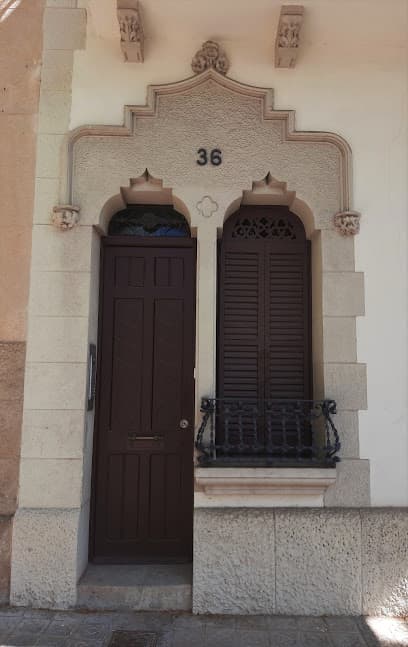
Casa Narcís Bosch
Sarrià-Sant Gervasi
A Modernista fever dream tucked away in Sarrià, where Salvador Valeri i Pupurull’s stone curves and ironwork prove that Gaudí wasn't the only genius in town.
0.0(0)
Tourist attraction
ATTRACTION
Plaça de Calvó
Sarrià-Sant Gervasi
A quiet, unpretentious slice of Sant Gervasi where the only drama is a toddler losing a shoe. No Gaudí, no crowds, just trees, benches, and the sound of real life in the Zona Alta.
0.0(0)
Park
ATTRACTION
Pipican Piscines i Esports
Sarrià-Sant Gervasi
A dirt-caked arena of canine chaos set against the polished backdrop of Sarrià-Sant Gervasi, where the neighborhood’s elite and their four-legged shadows come to settle scores.
0.0(0)
Park
Frequently Asked Questions
Is CosmoCaixa worth visiting?
Absolutely. For around €6, it offers one of the best value-for-money experiences in Barcelona, featuring a massive indoor Amazonian rainforest and world-class scientific exhibits.
How do I get to CosmoCaixa?
Take the FGC L7 train from Plaça de Catalunya to the Av. Tibidabo station. From there, it's a 10-15 minute uphill walk or a quick ride on the 196 or V15 bus.
What is the Flooded Forest?
It is a 1,000-square-meter replica of the Amazonian rainforest, complete with tropical rain, caimans, giant fish, and capybaras, viewable from both above and below the water level.
Do I need to book tickets in advance?
While you can often buy tickets at the door, it is highly recommended to book online via the official website, especially on weekends and for specific Planetarium shows which sell out quickly.
Reviews
0 reviews for CosmoCaixa Museum of Science
No reviews yet. Be the first to share your experience!