4.8
48 verified reviews
About
Barcelona is a pressure cooker. It’s a beautiful, sweat-soaked, garlic-scented pressure cooker trapped between the Mediterranean and a massive wall of green granite and pine. That wall is the Serra de Collserola. If you’ve spent more than forty-eight hours dodging selfie sticks on La Rambla or breathing in the diesel fumes of the Eixample, you need this place. It’s not a park in the way London or Paris has parks; it’s a mountain range that happens to be the city’s backyard, and it’s where the real Barcelona goes to breathe.
Getting there is half the trip. You hop on the FGC train, head toward the hills, and board the Funicular de Vallvidrera. As the car tilts and drags you up the incline, the air changes. The heavy, salt-thick humidity of the coast thins out. It starts to smell like rosemary, damp earth, and Aleppo pine. By the time you step out at Vallvidrera Superior, you’re in a different world. This is the Sarrià-Sant Gervasi heights, where the city’s noise is replaced by the rhythmic clicking of bicycle gears and the occasional rustle of something heavy in the underbrush.
The main artery here is the Carretera de les Aigües. It’s a flat, dusty path that snakes along the ridge, originally built for water pipes but now claimed by runners and cyclists in neon spandex. Is it crowded on a Sunday? Absolutely. It’s a goddamn zoo of strollers and mountain bikes. But go on a Tuesday morning, or late on a Thursday afternoon when the sun is dipping toward the Llobregat valley, and it’s transcendent. From here, the Sagrada Familia looks like a tiny, intricate sandcastle, and the Agbar Tower is just a glass thumb sticking out of the urban sprawl. You realize just how small the city actually is when you’re looking down on it from the high ridges of the mountain.
Then there are the locals. I’m not talking about the guys in the expensive hiking gear. I’m talking about the 'porcs senglars'—the wild boars. They are the unofficial mascots of Collserola, and they don’t give a damn about your picnic. They’re scruffy, indifferent, and occasionally aggressive if they think you’re hiding a sandwich. Seeing a family of boars cross a trail just a few miles from a Michelin-starred restaurant is the kind of cognitive dissonance that makes Barcelona great. It’s a reminder that despite the tourism boards and the gentrification, the wild is still waiting right at the edge of the metro line.
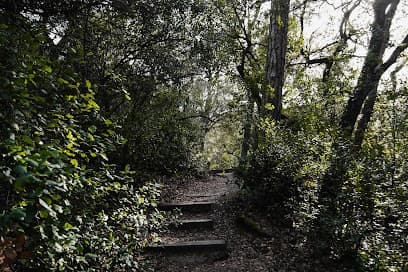
If you’re looking for the best hiking in Barcelona, you dive off the main paths. Follow the signs for the Font de la Budellera or head toward the Baixador de Vallvidrera. The trails get steeper, the canopy gets thicker, and the tourists disappear entirely. You’ll find old stone masias—farmhouses—tucked into the folds of the hills. Some of them still serve food: charred calçots in the winter, grilled lamb with allioli that will melt your soul, and cheap red wine served in a porrón. This is the honest, unadorned heart of Catalonia.
Collserola isn't perfect. The signage can be cryptic, the dust will ruin your white sneakers, and the Torre de Collserola—Norman Foster’s giant communications needle—is a constant, looming reminder of the modern world. But it’s essential. It’s the place that keeps the city sane. You come here to sweat, to see the horizon, and to remember that there’s more to life than tapas and Gaudí. It’s the escape valve every traveler needs.
Duration
3-5 hours
Best Time
Weekday mornings to avoid the local crowds, or sunset for the best photography light over the city.
What People Say
park(7)nature(5)strolling(3)bike(2)
Categories
NatureHikingBikingViewpoint
Ticket Prices
Free Admission
No tickets required
Must-See Highlights
Carretera de les Aigües for the city skyline
The view from the base of the Torre de Collserola
The Vallvidrera Reservoir (Pantà de Vallvidrera)
A traditional lunch at a mountain masia
Visitor Tips
Download an offline map like Maps.me or Wikiloc; trail markings can be confusing once you leave the main paths.
Bring plenty of water as fountains are scarce once you get deep into the woods.
If you're there on a weekend, watch out for high-speed mountain bikers on narrow trails.
Good For
HikersTrail runnersFamiliesNature loversBudget travelers
Why Visit
Unrivaled 360-degree views of Barcelona and the Mediterranean Sea
Over 8,000 hectares of protected Mediterranean forest accessible by metro
The Carretera de les Aigües, a perfectly flat 10km trail ideal for easy walking or running
Nearby Landmarks
- Tibidabo Amusement Park (20-minute walk or short bus ride)
- Torre de Collserola (15-minute walk from Vallvidrera Superior)
- Temple Expiatori del Sagrat Cor (20-minute walk)
- Vallvidrera Reservoir (25-minute hike from the Baixador station)
Accessibility
- Carretera de les Aigües is wheelchair accessible
- Funicular is accessible
- Many forest trails are steep and not suitable for limited mobility
Location
18,, Camí Santa Creu Olorda Vallvid, 16
Sarrià-Sant Gervasi, Barcelona
Nearby Hotels
Nearby Restaurants
In Sarrià-Sant Gervasi
ATTRACTION
Casa Narcís Bosch
Sarrià-Sant Gervasi
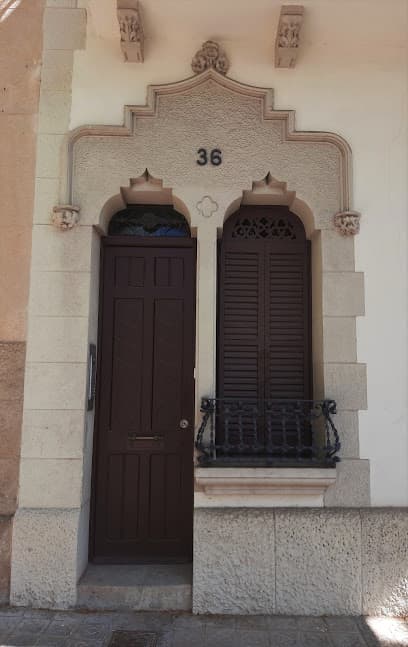
A Modernista fever dream tucked away in Sarrià, where Salvador Valeri i Pupurull’s stone curves and ironwork prove that Gaudí wasn't the only genius in town.
0.0(0)
Tourist attraction
ATTRACTION
Plaça de Calvó
Sarrià-Sant Gervasi
A quiet, unpretentious slice of Sant Gervasi where the only drama is a toddler losing a shoe. No Gaudí, no crowds, just trees, benches, and the sound of real life in the Zona Alta.
0.0(0)
Park
ATTRACTION
Pipican Piscines i Esports
Sarrià-Sant Gervasi
A dirt-caked arena of canine chaos set against the polished backdrop of Sarrià-Sant Gervasi, where the neighborhood’s elite and their four-legged shadows come to settle scores.
0.0(0)
Park
Frequently Asked Questions
Is Collserola worth visiting?
Absolutely, especially if you need a break from the urban heat. It offers the best panoramic views of Barcelona and a genuine escape into Mediterranean nature without leaving the city limits.
How do I get to Collserola Natural Park?
Take the FGC train (S1 or S2) from Plaça de Catalunya to Peu del Funicular, then transfer to the Vallvidrera Funicular. It’s all covered under a standard Zone 1 public transport ticket.
What should I wear to Collserola?
Wear sturdy walking shoes or sneakers; the trails are dusty and can be rocky. Even if it's hot in the city, bring a light layer as the temperature drops significantly on the mountain, especially after sunset.
Are the wild boars in Collserola dangerous?
They are generally used to humans but remain wild animals. Do not feed them or approach them, especially if they have piglets, as they can become protective and aggressive for food.
Reviews
0 reviews for Collserola
No reviews yet. Be the first to share your experience!