4.9
14 verified reviews
About
Forget the polished marble of the city’s museums and the sanitized gift shops of the Gaudí trail. If you want to see the soul of Barcelona—the mechanical, grease-stained, working-class soul—you need to haul yourself up the hill of Montjuïc on a Sunday morning. Specifically, you need to find Carrer dels Tarongers. There, tucked away from the tour bus routes, you’ll find a gathering of steel and chrome that tells the story of Spain more honestly than any history book ever could.
This isn't a museum. There are no velvet ropes, no 'do not touch' signs, and certainly no admission fee. It’s a grassroots, informal assembly of petrolheads, gearheads, and old men who refuse to let the 20th century die. As you walk up the winding road, the first thing that hits you isn't the view of the Mediterranean—though that’s there, shimmering in the background—it’s the smell. It’s the visceral, nostalgic scent of unburnt hydrocarbons, old leather, and hot oil. It’s the sound of flat-four engines coughing into life and the rhythmic click-clack of cooling metal.
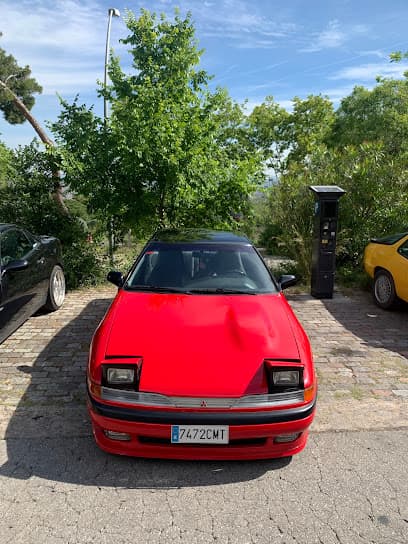
Line up along the curb, you’ll see the icons of the Spanish 'Miracle.' The SEAT 600 is the undisputed king here. This is the car that put Spain on wheels in the 50s and 60s, the tiny, buzzing bubble of a vehicle that allowed families to finally escape the city for the coast. Seeing them here, meticulously maintained or proudly wearing the patina of half a century, is like seeing a fleet of time machines. But it’s not just the local legends. You’ll find boxy Alfas that look like they’ve just finished a rally stage, American muscle cars that feel absurdly oversized for these European streets, and the occasional Porsche that’s been driven with the kind of enthusiasm that would make a collector weep.
The people are the real draw, though. This is a community of 'abuelos' in flat caps who have owned the same car since the Franco era, standing shoulder-to-shoulder with younger enthusiasts who spend their weekends hunting for obscure parts in dusty workshops. They stand around with hoods popped, gesturing at engines with calloused fingers, debating the merits of various spark plugs over thermoses of coffee. There is an absolute lack of pretension here. It doesn't matter if your car is a museum-quality restoration or a rattling work-in-progress; if it has a soul and a manual gearbox, you’re part of the club.
Is it worth the trek? If you’re the kind of person who sees a car as a mere appliance to get from point A to point B, probably not. You’ll just see a bunch of old metal blocking a scenic road. But if you understand that a car can be a vessel for memory, a masterpiece of engineering, or a symbol of national identity, then this is one of the best things to do in Sants-Montjuïc. It’s a reminder that in a world of increasingly sterile, autonomous, electric boxes, there’s still a place for the loud, the smelly, and the beautiful. It’s raw, it’s honest, and it’s one of the few remaining places in Barcelona that hasn't been packaged for tourist consumption. Just show up, keep your hands out of your pockets, and show some respect for the machinery.
Type
Tourist attraction
Duration
1-2 hours
Best Time
Sunday mornings around 11:00 AM when the most cars have arrived.
What People Say
saturday(4)environment(2)
Features
Tourist attraction
Categories
AutomotiveLocal CulturePhotographyFree
Ticket Prices
Free Admission
No tickets required
Opening Hours
- Monday9 AM to 1 PM
- Tuesday9 AM to 1 PM
- Wednesday9 AM to 1 PM
- Thursday9 AM to 1 PM
- Friday9 AM to 1 PM
- SaturdayClosed
- Sunday9 AM to 1 PM
Must-See Highlights
The SEAT 600 'Pelotilla' collection
Vintage Spanish motorcycles often parked nearby
The panoramic views of the Barcelona port from the road's edge
Visitor Tips
Bring a camera; the lighting on the hill is perfect for car photography.
Don't expect a formal event; it's a casual meet-up of friends and owners.
Combine this with a visit to the nearby Montjuïc Castle or the Joan Brossa gardens.
Good For
Car enthusiastsPhotographersBudget travelersLocals
Why Visit
Authentic grassroots atmosphere with no commercial polish
Historical collection of SEAT 600s and Spanish automotive icons
Stunning backdrop of the Montjuïc hillside and Mediterranean sea
Nearby Landmarks
- Montjuïc Castle (10-minute walk)
- Jardins de Joan Brossa (2-minute walk)
- Telefèric de Montjuïc - Station Mirador (5-minute walk)
- Fundació Joan Miró (15-minute walk)
Accessibility
- Outdoor street location
- Paved road
- Hilly terrain may be challenging for some
Location
Carrer dels Tarongers
Sants-Montjuïc, Barcelona
Nearby Hotels
Nearby Restaurants
In Sants-Montjuïc
ATTRACTION
Bolets1
Sants-Montjuïc
A gritty, earthy temple to the Catalan obsession with wild mushrooms, where the dirt is real, the fungi are seasonal gold, and the air smells like the damp floor of a Pyrenean forest.
0.0(0)
Tourist attraction
ATTRACTION
Montjuic aparca
Sants-Montjuïc
The unglamorous base camp for your Montjuïc assault. A tactical slab of asphalt where the city's chaos fades into the pine-scented ghosts of the 1992 Olympics.
0.0(0)
Tourist attraction
ATTRACTION
Паркінг Барселона
Sants-Montjuïc
A sprawling slab of industrial reality in the Zona Franca. No Gaudí here—just hot asphalt, diesel fumes, and the honest utility of a secure place to park your rig.
0.0(0)
Park
Frequently Asked Questions
Is the classic car meet worth visiting?
Absolutely, if you appreciate vintage machinery and local culture. It is a non-touristy, authentic gathering of enthusiasts with a great atmosphere and zero cost.
When does the classic car meet happen?
The gathering typically takes place every Sunday morning, usually between 10:00 AM and 1:00 PM, though it is informal and weather-dependent.
How do I get to Carrer dels Tarongers?
Take the 150 bus from Plaça d'Espanya toward Montjuïc Castle and get off near the Jardins de Joan Brossa, or take the Montjuïc Cable Car and walk down.
Do I need tickets for the classic car show?
No, it is a public gathering on a city street. There are no tickets, no gates, and no fees to view the cars.
Reviews
0 reviews for Coches clásicos.
No reviews yet. Be the first to share your experience!