4.5
35 verified reviews
About
Montjuïc is a beast of a hill, a sprawling limestone hump that’s seen everything from anarchist executions to the glitzy excess of the 1992 Olympics. Most people get off the bus at the MNAC, snap a photo of the city from the terrace, and think they’ve seen it. They haven’t. If you want the soul of this mountain, you have to head into the Jardins de Laribal and find the Cascada de La Font del Gat. It’s not a place for the checklist-ticking crowd. It’s a place for the wanderers, the ones who don’t mind a bit of damp stone and the smell of wet earth.
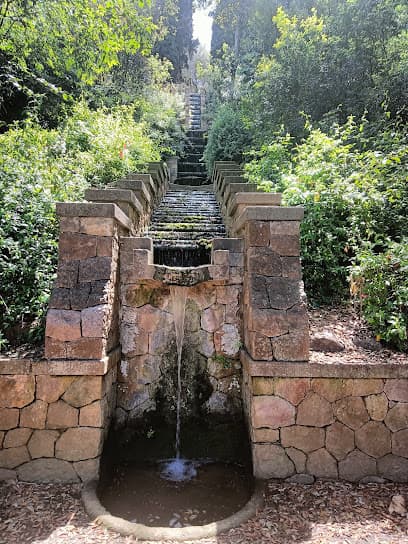
As you descend the brick-lined stairs of the gardens, the roar of Barcelona’s traffic begins to fade, replaced by the rhythmic drip of water and the rustle of cypress trees. This isn't the manicured, sterile beauty of a modern park. This is the work of Jean-Claude Nicolas Forestier and Nicolau Maria Rubió i Tudurí for the 1929 International Exposition, and it feels like it. It’s an exercise in Mediterranean melancholy—terraced gardens, shaded pergolas, and tiles that have seen better days. The Cascada itself is a modest waterfall, a gentle spill of water over calcified rocks and thick carpets of moss. It’s quiet. It’s cool. It’s the kind of place where you can actually hear yourself think, which is a rare commodity in this city.
At the heart of it is the Font del Gat—the Fountain of the Cat. You’ll see the spout, carved into the shape of a cat’s head, spilling water into a stone basin. To a local, this isn't just a fountain; it’s a piece of cultural DNA. There’s a famous Catalan folk song, 'La Font del Gat,' about a soldier and a girl meeting here. It’s a song every child in Barcelona knows, a bit of romantic lore that hangs over the place like the humidity. In the early 20th century, this was the spot for 'aplecs'—popular gatherings where people would escape the cramped, smoky streets of the Raval to eat, drink, and dance under the trees. You can still feel that ghost of a simpler, rougher Barcelona here.
The architecture surrounding the waterfall is equally compelling. Nearby stands a building designed by Josep Puig i Cadafalch, one of the titans of Modernisme. It used to be a restaurant where the city’s elite would dine while looking down at the commoners in the gardens. Today, it’s often quiet, its shutters closed, adding to the sense that you’ve stumbled into a part of the city that the 21st century hasn't quite figured out what to do with yet.
Is it worth the hike? If you’re looking for high-octane thrills or a gift shop, stay away. But if you want to understand the layers of this city—the way it blends high art with folk tradition, the way it hides its best corners in plain sight—then yes, it’s essential. It’s one of the best things to do in Montjuïc if you actually want to feel the mountain. Bring a bottle of cheap wine, a hunk of Manchego, and sit on one of the stone benches. Watch the water hit the moss. Listen to the silence. It’s an honest experience in a city that is increasingly being sold as a theme park. The Cascada de La Font del Gat doesn't care if you like it or not. It’s been there for a hundred years, and it’ll be there, dripping away, long after the tour buses have moved on to the next 'must-see' attraction.
Type
Tourist attraction
Duration
45-60 minutes
Best Time
Late afternoon when the light filters through the trees and the shadows get long.
What People Say
walking(2)
Features
Tourist attraction
Categories
ParkGardenHistoryArchitecture
Ticket Prices
Free Admission
No tickets required
Must-See Highlights
The cat-head fountain spout
The terraced brick stairs of Jardins de Laribal
The Puig i Cadafalch building overlooking the gardens
The moss-covered stone waterfall
Visitor Tips
Wear comfortable shoes as the paths are uneven and involve many stairs.
Combine this with a visit to the Teatre Grec nearby for a full afternoon of quiet exploration.
It's a perfect spot for a picnic away from the crowds of the Magic Fountain.
Good For
CouplesSolo travelersHistory buffsNature lovers
Why Visit
Historic 1929 International Exposition landscaping by Forestier
The iconic cat-head carved water spout
Deep connection to Catalan folk culture and the 'La Font del Gat' song
Nearby Landmarks
- Teatre Grec (3-minute walk)
- Fundació Joan Miró (8-minute walk)
- Museu Nacional d'Art de Catalunya - MNAC (10-minute walk)
- Poble Espanyol (12-minute walk)
Accessibility
- Limited accessibility due to numerous stone stairs and terraced paths.
Location
Sants-Montjuïc, Barcelona
Nearby Hotels
Nearby Restaurants
In Sants-Montjuïc
ATTRACTION
Bolets1
Sants-Montjuïc
A gritty, earthy temple to the Catalan obsession with wild mushrooms, where the dirt is real, the fungi are seasonal gold, and the air smells like the damp floor of a Pyrenean forest.
0.0(0)
Tourist attraction
ATTRACTION
Montjuic aparca
Sants-Montjuïc
The unglamorous base camp for your Montjuïc assault. A tactical slab of asphalt where the city's chaos fades into the pine-scented ghosts of the 1992 Olympics.
0.0(0)
Tourist attraction
ATTRACTION
Паркінг Барселона
Sants-Montjuïc
A sprawling slab of industrial reality in the Zona Franca. No Gaudí here—just hot asphalt, diesel fumes, and the honest utility of a secure place to park your rig.
0.0(0)
Park
Frequently Asked Questions
Is Cascada de La Font del Gat worth visiting?
Yes, if you want a quiet, historic escape from the tourist crowds. It’s a beautiful example of 1920s landscaping with deep local cultural significance.
How do I get to Font del Gat?
Take the metro to Plaça d'Espanya and walk up toward the MNAC, then follow signs for Jardins de Laribal. Alternatively, take the 55 or 150 bus and get off near the Teatre Grec.
What is the story behind Font del Gat?
It is famous for a popular Catalan folk song about a soldier and a girl who met at the fountain. Historically, it was a popular spot for locals to gather for outdoor picnics and festivals.
Is there an entrance fee for Jardins de Laribal?
No, the gardens and the waterfall are part of a public park and are completely free to enter during park hours.
Reviews
0 reviews for Cascada de La Font del gat
No reviews yet. Be the first to share your experience!