4.5
66 verified reviews
About
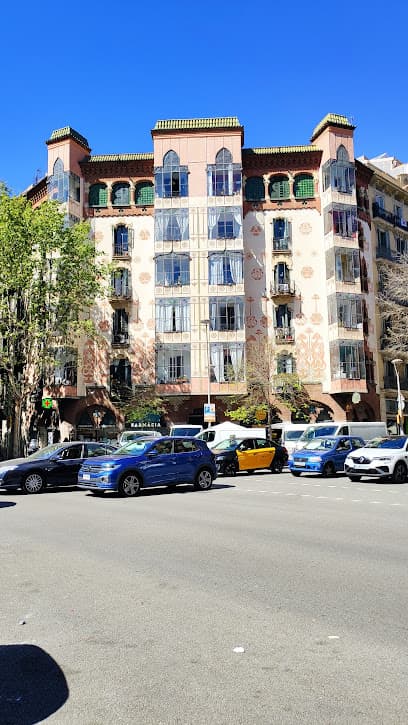
Look, I get it. You’re in Barcelona. You want the melting clocks, the dragon scales, and the architectural equivalent of an acid trip. You want Gaudí. But if you spend your whole trip staring at the Sagrada Família through the screen of a stranger’s iPhone, you’re missing the point of this city. You’re missing the quiet, dignified genius of places like Casa Manuel Llopis Bofill. It sits on the corner of Carrer de Bailèn and València, a middle finger to the bland, glass-and-steel boxes of the modern world, and yet most people walk right past it without looking up from their Google Maps.
Built between 1902 and 1903, this isn't just another apartment block. It’s the work of Antoni Maria Gallissà i Soqué, a man who was just as obsessed with the Catalan identity as his more famous contemporaries but had a different way of showing it. While Gaudí was looking at bones and trees, Gallissà was looking back at the Mudéjar—the Islamic-influenced style of medieval Spain. He took those intricate brick patterns and fused them with the burgeoning Modernisme movement, creating something that feels both ancient and radical. It’s one of the most underrated examples of Modernisme architecture in Barcelona, located in the heart of the Eixample district.
The first thing that hits you—if you have the sense to stop—is the sgraffito. This isn't some cheap paint job. Sgraffito is a brutal, labor-intensive technique where layers of colored plaster are applied and then scratched away to reveal a design. On this facade, it’s a riot of floral patterns and geometric shapes that wrap around the building like a tailored suit. Then there’s the brickwork. Gallissà used exposed red brick to create textures and shadows that change as the Mediterranean sun moves across the sky. It’s tactile, visceral, and honest. You can see the hand of the craftsman in every inch of it.
Look at the balconies. The wrought iron isn't just there to keep people from falling off; it’s twisted into delicate, organic forms that look like they’re trying to grow into the street. And the ceramics—splashes of green and white tiles that catch the light and remind you that in this city, even a residential building was an opportunity for art. This is the 'Quadrat d’Or' (the Golden Square) at its most authentic. It’s not a museum; it’s a living, breathing part of the neighborhood. People actually live here. They hang their laundry behind those masterpiece balconies, they argue about the price of tomatoes, and they probably wonder why you’re standing on the sidewalk staring at their front door.
Is Casa Manuel Llopis Bofill worth it? If you want a gift shop and an audio guide narrated by a B-list celebrity, then no. Go join the queue at Casa Batlló and enjoy the elbow-to-elbow shuffle. But if you want to understand the real fabric of Barcelona—the obsessive attention to detail, the pride in craftsmanship, and the layers of history that make this city more than just a tourist backdrop—then stand on this corner for ten minutes. It’s free, it’s beautiful, and it’s real. It’s a reminder that the best things in travel aren't always the ones with the longest lines. Sometimes, they’re just the ones we’re too busy to notice.
Type
Historical landmark, Tourist attraction
Duration
15-30 minutes
Best Time
Morning for the best photographic light on the facade
What People Say
architecture(4)
Features
Historical landmark
Tourist attraction
Categories
ArchitectureModernismeHistorical Site
Ticket Prices
Free Admission
No tickets required
Must-See Highlights
The intricate sgraffito patterns on the upper floors
Neo-Mudéjar style brickwork around the windows
Ornate wrought-iron balconies
Ceramic tile details on the roofline
Visitor Tips
Bring a zoom lens to capture the details of the upper-floor sgraffito
Combine this with a walk down Carrer de Bailèn to see other lesser-known Modernista buildings
Respect the residents; don't try to enter the lobby or block the entrance
Good For
Architecture loversPhotographersBudget travelersHistory buffs
Why Visit
Exceptional Neo-Mudéjar brickwork rarely seen in Eixample
Intricate sgraffito facade spanning the entire corner exterior
Authentic Modernista gem without the tourist crowds of Gaudí sites
Nearby Landmarks
- 5-minute walk from Casa de les Punxes
- 8-minute walk from Passeig de Gràcia
- 12-minute walk from Sagrada Família
- 10-minute walk from Palau Robert
Accessibility
- Viewable from public sidewalk
- Flat terrain in Eixample
Location
Carrer de Bailèn, 113
Eixample, Barcelona
Nearby Hotels
Nearby Restaurants
In Eixample
ATTRACTION
Mural Margalef
Eixample
A towering splash of Mediterranean blue breaking the rigid geometry of Eixample, Joan Margalef’s mural is a visceral reminder that Barcelona’s soul isn't just in its museums.
0.0(0)
Tourist attraction
ATTRACTION
Mural Margalef
Eixample
A geometric middle finger to urban decay, this massive kinetic mural by Eduard Margalef turns a drab Eixample blind wall into a rhythmic, shifting explosion of optical art.
0.0(0)
Tourist attraction
ATTRACTION
Happy Foodies
Eixample
Forget the plastic-wrapped tourist traps; this is a deep dive into the grease, garlic, and soul of Catalan cooking where you actually learn to handle a knife and a porrón.
0.0(0)
Sightseeing tour agencyTour agency
Frequently Asked Questions
Can you go inside Casa Manuel Llopis Bofill?
No, it is a private residential building. You can only admire the intricate sgraffito and brickwork from the street.
Who was the architect of Casa Manuel Llopis Bofill?
The building was designed by Antoni Maria Gallissà i Soqué, a prominent Modernista architect and collaborator of Lluís Domènech i Montaner.
How much does it cost to visit?
It is completely free to view from the sidewalk as it is a public-facing historical landmark in the Eixample district.
What is the best time to see the building?
Morning light is best for photographing the intricate sgraffito and brick textures on the Bailèn and València street facades.
Reviews
0 reviews for Casa Manuel Llopis Bofill
No reviews yet. Be the first to share your experience!