4.2
22 verified reviews
About
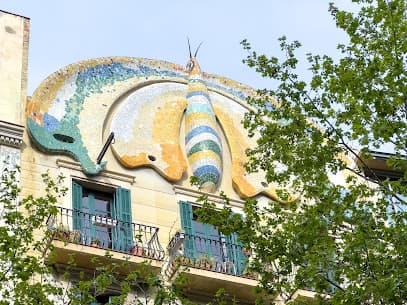
Look up. If you’re walking down Carrer de Llança and you aren’t looking up, you’re missing the point of this city entirely. Right there, perched on the crown of a building that looks like it was squeezed out of a pastry bag, is a giant, shimmering butterfly. This is Casa Fajol, or as the locals call it, Casa de la Papallona. It’s a 1912 Modernista middle finger to the boring, the beige, and the utilitarian. While the rest of the world was worrying about the impending Great War, Josep Graner i Prat was busy figuring out how to stick a massive lepidoptera onto a residential roofline using nothing but broken ceramics and pure, unadulterated gall.
You won’t find the crushing crowds of the Sagrada Familia here. There are no velvet ropes, no overpriced audio guides, and no gift shops selling plastic fans. Casa Fajol is a private residence, which means you’re staying on the sidewalk. You’re standing in the exhaust of the city, likely next to someone rushing to catch a bus at the nearby Estació d'Autobusos Sants, but that’s the charm of it. It’s architecture that lives in the real world, not a museum. It’s one of the best architecture Barcelona spots that most people walk right past because they’re too busy looking at their phones or trying to find the entrance to the mall next door.
The building itself is a narrow, vertical slice of Eixample history. The facade is draped in floral motifs and undulating balconies that look like they might melt if the sun gets too hot. But the star of the show is the pediment. That butterfly—the papallona—is executed in trencadís, the classic Catalan technique of using broken shards of tile to create a mosaic. It catches the light in a way that feels almost predatory, a splash of yellow, green, and blue that refuses to be ignored. It was commissioned by Salvador Fajol, and while we don't know exactly what he was thinking, he clearly wanted something that would stand out in a neighborhood that was rapidly becoming the heart of the new Barcelona.
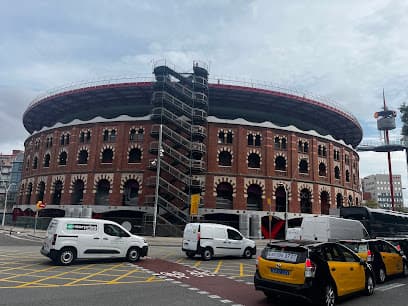
Directly across the street is the Las Arenas mall. It used to be a bullring, a place of blood and sand and tradition. Now it’s a temple to consumerism with a rooftop view. The contrast is jarring. You have this massive, circular brick behemoth on one side and this delicate, winged whim of a building on the other. It’s a perfect microcosm of Barcelona: the heavy weight of history constantly being poked and prodded by the avant-garde. If you're looking for things to do in Eixample that don't involve a queue, this is your spot.
Is Casa Fajol worth it? If you’re the kind of person who needs a tour guide to tell you when to be impressed, probably not. But if you appreciate the weird, the specific, and the beautiful things that survive in the cracks of a modern city, it’s essential. It’s a reminder that even a regular apartment block can be a work of art. You stand there for ten minutes, crane your neck until it hurts, take the photo, and then move on. You’ve seen something that most tourists miss because they’re too busy following the herd to the next 'must-see' landmark. This isn't a museum; it's a survivor. It’s a piece of the 1912 dream still clinging to the skyline, watching the traffic go by with ceramic eyes. It’s honest, it’s beautiful, and it doesn’t care if you like it or not.
Type
Historical landmark, Tourist attraction
Features
Historical landmark
Tourist attraction
Categories
ModernismeArchitectureHistory
Accessibility
- Street-level viewing
- Paved sidewalks
- Publicly visible from the road
Location
Carrer de Llança, 20
Eixample, Barcelona
Nearby

ATTRACTION
IKONO Barcelona
100 m · Eixample
A neon-soaked fever dream inside a former bullring where you can dive into a massive ball pit and chase the perfect shot through a labyrinth of sensory-overload rooms.
4.7(8K)
Tourist attractionEvent venue
ATTRACTION
Mirador
100 m · Eixample
A former bullring turned temple of commerce, offering a 360-degree punch to the gut with views of Montjuïc, the Magic Fountain, and the sprawling Eixample grid.
4.6(127)
Tourist attraction
RESTAURANT
Restaurant Arrosseria las Arenas
€€50 m · Eixample
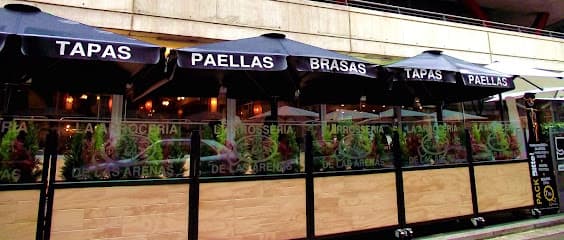
Forget the mall food upstairs. This is where the real rice lives, served with a side of Eixample hustle and a socarrat that’ll make you weep for every bad paella you’ve ever had.
4.5(7K)
RestaurantMediterranean restaurant

RESTAURANT
PURA BRASA Arenas
€€50 m · Eixample
Forget mall food. Inside a repurposed bullring, the Josper ovens roar, turning Wagyu and octopus into charred, smoke-heavy plates for a crowd that knows fire is the best seasoning.
4.1(3K)
RestaurantBar & grill

HOTEL
B Hotel
€50 m · Eixample
Perched over the chaos of Plaça d'Espanya, this is a sleek, no-nonsense basecamp with a rooftop pool that makes the roar of the Gran Via feel like a distant memory.
4.5(1K)
Hotel
HOTEL
Ofelias Hotel
€€€50 m · Eixample
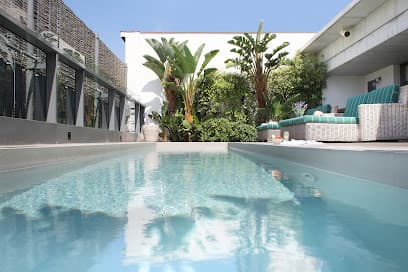
A four-star hotel with an outdoor pool and terrace on Carrer de Llança in Eixample, rated 4.3 from 437 Google reviews; the metro is what reviewers mention most.
4.3(437)
Hotel
Frequently Asked Questions
Is Casa Fajol worth visiting?
Yes, if you appreciate Modernista architecture and want to see a unique landmark without the crowds. It only takes 10 minutes to view the facade, making it an easy stop near Plaça d'Espanya.
Can you go inside Casa Fajol?
No, Casa Fajol is a private residential building. Visitors are only permitted to view the exterior facade and the famous butterfly mosaic from the street.
What is the 'Butterfly House' in Barcelona?
Casa Fajol is known as the 'Butterfly House' (Casa de la Papallona) due to the large, colorful butterfly mosaic made of broken ceramic tiles (trencadís) located at the top of its facade.
How do I get to Casa Fajol?
The building is located at Carrer de Llança, 20. The easiest way to get there is by taking the Metro (L1 or L3) to the Espanya station and walking about three minutes toward the Las Arenas shopping center.
Reviews
0 reviews for Casa Fajol
No reviews yet. Be the first to share your experience!