4.7
160,837 verified reviews
About
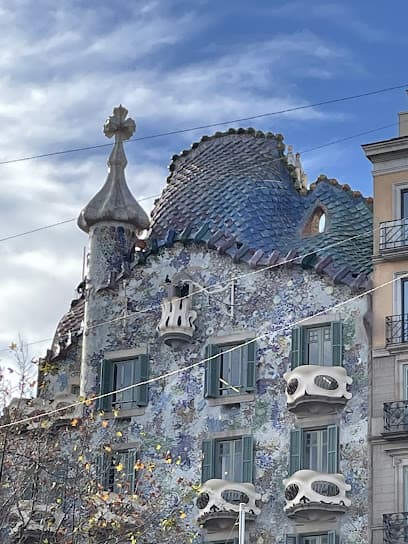
Standing on the Passeig de Gràcia, surrounded by the high-end boutiques and the polished ego of the Eixample, Casa Batlló hits you like a fever dream. It’s a house that looks like it was designed by someone who’d spent a long weekend on a steady diet of absinthe and Mediterranean sunlight. Locally, they call it the 'Casa dels ossos'—the House of Bones—and for good reason. The balconies look like the skeletal remains of some prehistoric beast, and the columns on the ground floor resemble the tibias of a giant. It’s weird, it’s visceral, and it’s one of the best Gaudí buildings Barcelona has to offer.
In 1904, Josep Batlló, a textile tycoon with a point to prove, gave Antoni Gaudí a blank check and a boring apartment block. He wanted something that would make the neighbors weep with envy. What he got was a structural middle finger to the straight line. Gaudí didn't just renovate; he breathed life into the stone. The facade is a shimmering mess of broken ceramic tiles and glass—the famous trencadís—that changes color depending on how the light hits it. It’s the kind of craftsmanship that makes you realize how lazy modern architecture has become. This isn't just a building; it’s a living organism.
Once you step inside, the straight lines vanish entirely. The walls curve, the ceilings swirl like whirlpools, and the wood looks like it’s still growing. You’re handed an augmented reality tablet—the 'Smart Guide'—which is usually the kind of gimmick I’d tell you to throw in the harbor. But here, it actually works. You hold it up, and the empty rooms fill with the organic inspirations Gaudí saw: turtles swimming through the light well, mushrooms sprouting from the fireplaces. It’s a glimpse into the mind of a man who saw the world differently than the rest of us. The central light well, tiled in shades of blue that darken as you go up to mimic the depths of the ocean, is a masterclass in light and ventilation.
Then there’s the roof. This is where the story of Saint George and the Dragon comes to life. The roofline is the arched back of the beast, covered in iridescent scales, with a four-armed cross representing the sword of the saint plunged into its spine. It’s theatrical, it’s over-the-top, and it’s magnificent. You’re standing there among the chimneys that look like masked sentinels, looking out over the city, and you realize that Gaudí wasn't just an architect; he was a set designer for a play that never ends.
Let’s be honest: the price of Casa Batlló tickets is a kick in the teeth. It’s expensive, and the crowds can be a suffocating sea of selfie sticks. If you show up at noon, you’re going to spend half your time dodging elbows. But is Casa Batlló worth it? Yeah, it is. Even with the '10D Experience' and the immersive rooms that feel a bit like a high-tech theme park, the core of the place remains a pure, unadulterated protein rush of creativity. It’s a reminder that humans are capable of building things that aren't just functional boxes. It’s a testament to the beautiful, chaotic soul of Barcelona.
If you want to survive this experience with your sanity intact, go early. Be the first person through the door at 9:00 AM, or wait for the night visits when the shadows make the house look even more skeletal. Skip the basic 'Blue' ticket if you can swing it; the 'Gold' or 'Silver' tiers get you into the private Batlló family rooms and the Gaudí Cube, which is a mind-bending immersive room by Refik Anadol that actually justifies the hype. Just don't expect a quiet moment of reflection. This is a spectacle, and in Barcelona, the spectacle is king.
Type
Historical landmark, Amusement center
Duration
1.5-2 hours
Best Time
9:00 AM for the first entry to avoid the heaviest crowds, or after 7:00 PM for a more atmospheric experience.
Guided Tours
Available
Audio Guide
Available
What People Say
gaudi(10275)audio guide(3902)genius(1604)tablet(1223)augmented reality(832)casa mila(813)sagrada familia(634)ticket(457)
Features
Historical landmark
Amusement center
Tourist attraction
Categories
ArchitectureUNESCO World HeritageGaudíModernisme
Ticket Prices
adult€35
child€0 (under 12)
senior€32
Opening Hours
- Monday8:30 AM to 10 PM
- Tuesday8:30 AM to 10 PM
- Wednesday8:30 AM to 10 PM
- Thursday8:30 AM to 10 PM
- Friday8:30 AM to 10 PM
- Saturday8:30 AM to 10 PM
- Sunday8:30 AM to 10 PM
Must-See Highlights
The Noble Floor (the Batlló family's former residence)
The Blue Light Well with its darkening tile gradient
The Dragon's Back roof terrace
The Gaudí Cube immersive room
Visitor Tips
Book the 'First Entry' ticket to get photos without hundreds of other tourists in the shot.
The 'Gold' ticket includes access to the private residence rooms which are often less crowded.
Check the weather; the roof terrace is the highlight and is best enjoyed on a clear day.
Good For
Architecture loversFamilies with tech-savvy kidsPhotography enthusiastsFirst-time Barcelona visitors
Why Visit
The 'Dragon's Back' roof terrace with its iconic trencadís chimneys
Immersive augmented reality 'Smart Guide' that brings Gaudí's visions to life
The Gaudí Cube, a world-first 360-degree digital art installation by Refik Anadol
Nearby Landmarks
- 1-minute walk from Casa Amatller
- 2-minute walk from Casa Lleó i Morera
- 12-minute walk from Casa Milà (La Pedrera)
- 5-minute walk from El Nacional
Accessibility
- Wheelchair accessible (lift available to most floors)
- Audio guides with descriptive audio for the visually impaired
- Braille texts available
Location
Pg. de Gràcia, 43
Eixample, Barcelona
Nearby Hotels
Nearby Restaurants
In Eixample
ATTRACTION
Mural Margalef
Eixample
A towering splash of Mediterranean blue breaking the rigid geometry of Eixample, Joan Margalef’s mural is a visceral reminder that Barcelona’s soul isn't just in its museums.
0.0(0)
Tourist attraction
ATTRACTION
Mural Margalef
Eixample
A geometric middle finger to urban decay, this massive kinetic mural by Eduard Margalef turns a drab Eixample blind wall into a rhythmic, shifting explosion of optical art.
0.0(0)
Tourist attraction
ATTRACTION
Happy Foodies
Eixample
Forget the plastic-wrapped tourist traps; this is a deep dive into the grease, garlic, and soul of Catalan cooking where you actually learn to handle a knife and a porrón.
0.0(0)
Sightseeing tour agencyTour agency
Frequently Asked Questions
Is Casa Batlló worth visiting?
Yes, despite the high ticket price and crowds, it is an architectural masterpiece that offers a unique, immersive look into Gaudí's genius. The augmented reality tour and the 'Gaudí Cube' make it a standout experience even for those who aren't architecture buffs.
What should I see at Casa Batlló?
Don't miss the dragon-back roof terrace, the blue-tiled central light well, and the 'Gaudí Cube' immersive experience. The facade itself is a highlight, especially when lit up at night.
How do I get to Casa Batlló?
It is located on Passeig de Gràcia in the Eixample district. You can take the L2, L3, or L4 metro lines to the Passeig de Gràcia station, which is just a few steps from the entrance.
Do I need to book Casa Batlló tickets in advance?
Absolutely. Tickets are sold in time slots and often sell out days in advance, especially during peak season. Booking online also saves you from waiting in long queues at the ticket office.
Reviews
0 reviews for Casa Batlló
No reviews yet. Be the first to share your experience!