4.5
2 verified reviews
About
If you want to understand the Eixample, you have to stop looking at the melting balconies of the Mançana de la Discòrdia for five minutes and walk over to Carrer d'Ausiàs Marc. This is where the real money lived—the textile barons who didn't necessarily want a house that looked like a psychedelic trip. They wanted power, they wanted prestige, and they wanted Enric Sagnier. Casa Antoni Roger is the physical manifestation of that 1880s industrial ego, a building so technically proficient it walked away with the City Council’s prize for the best artistic building in 1892.
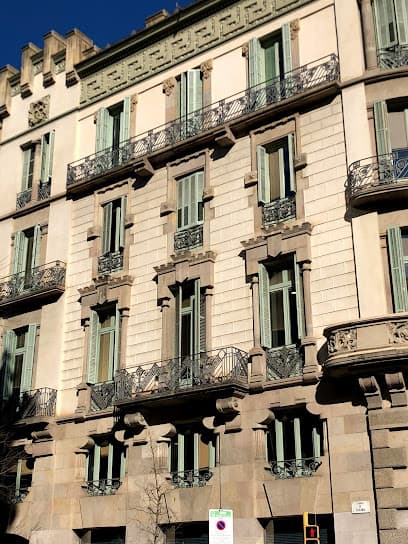
Enric Sagnier i Villavecchia was the man who actually built Barcelona. While Gaudí was off talking to God and Puig i Cadafalch was dreaming of Gothic castles, Sagnier was the workhorse of the bourgeoisie. He designed over 300 buildings in this city, and Casa Antoni Roger is one of his early, eclectic flexes. It sits on the corner like a well-tailored suit—precise, expensive, and slightly intimidating. The facade is a masterclass in stone carving, featuring a rhythmic progression of balconies and pediments that scream 'old money' without needing to shout. It’s not 'Modernisme' in the way the guidebooks usually sell it; it’s the bridge between the sober Neoclassicism of the past and the floral explosion that was about to hit the city.
Standing on the sidewalk, you can see the hierarchy of 19th-century life etched into the stone. The 'planta noble'—the first floor where the Roger family actually lived—is dripping with more detail than the floors above, where the less important people were tucked away. Look at the corner tower; it’s a classic Sagnier move, giving the building a sense of verticality and importance that anchors the entire block. The ironwork on the balconies isn't just there to keep you from falling; it’s a display of the city’s industrial might, forged in the same fires that made the Roger family their fortune.
Most tourists skip this street. They’re too busy elbowing each other for a selfie in front of Casa Batlló. Their loss. Ausiàs Marc has a different energy—it’s quieter, grittier, and feels more like the Barcelona that actually works for a living. You can’t just waltz into Casa Antoni Roger; it’s private property, largely occupied by offices and foundations over the years. But that’s the point. This wasn't built for you to tour; it was built to be lived in and worked in. It’s a piece of the city’s living tissue, a reminder that before the city became a playground for the world, it was a workshop for the ambitious. The Montjuïc stone hasn't just weathered the decades; it has absorbed the soot and the salt air, turning a dignified grey that reflects the serious business once conducted behind those heavy windows.
Is it worth the detour? If you give a damn about architecture beyond the 'Disney-fied' highlights, then yes. It’s a lesson in restraint and the sheer quality of craftsmanship that defined the Eixample’s 'Quadrat d'Or' (Golden Square). You come here to see the bones of the city, to see what happened when the richest men in Catalonia hired the most reliable architect in history to build them a monument to their own success. It’s honest, it’s heavy, and it’s undeniably Barcelona. It represents an era when the Eixample was still a grand experiment in urban living, long before the tour buses arrived to turn every masterpiece into a backdrop for a postcard.
Type
Tourist attraction
Duration
15-30 minutes
Best Time
Morning or late afternoon for the best light on the stone facade.
Features
Tourist attraction
Categories
ArchitectureModernismeHistory
Ticket Prices
Free Admission
No tickets required
Must-See Highlights
The ornate corner tower
The detailed stonework on the 'planta noble' (first floor)
The intricate wrought-iron balcony railings
Visitor Tips
Combine this with a visit to Casa Calvet nearby to see the contrast between Sagnier and Gaudí.
Look up at the roofline to see the decorative cresting that won the building its 1892 award.
The street is much quieter than Passeig de Gràcia, making it a great spot for architectural photography without the crowds.
Good For
Architecture buffsHistory enthusiastsPhotographersSolo travelers
Why Visit
1892 City Council Prize winner for best artistic building
Masterwork by Enric Sagnier, Barcelona's most prolific architect
Prime example of the 'Eclectic' style that preceded the Modernista boom
Nearby Landmarks
- Casa Calvet (5-minute walk)
- Palau de la Música Catalana (10-minute walk)
- Arc de Triomf (8-minute walk)
- Plaça de Catalunya (12-minute walk)
Accessibility
- Viewable from the public sidewalk
- Flat terrain in the Eixample district
Location
Carrer d'Ausiàs Marc, 33-35
Eixample, Barcelona
Nearby Hotels
Nearby Restaurants
In Eixample
ATTRACTION
Mural Margalef
Eixample
A towering splash of Mediterranean blue breaking the rigid geometry of Eixample, Joan Margalef’s mural is a visceral reminder that Barcelona’s soul isn't just in its museums.
0.0(0)
Tourist attraction
ATTRACTION
Mural Margalef
Eixample
A geometric middle finger to urban decay, this massive kinetic mural by Eduard Margalef turns a drab Eixample blind wall into a rhythmic, shifting explosion of optical art.
0.0(0)
Tourist attraction
ATTRACTION
Happy Foodies
Eixample
Forget the plastic-wrapped tourist traps; this is a deep dive into the grease, garlic, and soul of Catalan cooking where you actually learn to handle a knife and a porrón.
0.0(0)
Sightseeing tour agencyTour agency
Frequently Asked Questions
Can you go inside Casa Antoni Roger?
Generally, no. The building is private property and used for offices or institutional purposes. You are here to admire one of Enric Sagnier's most celebrated facades from the street.
Who was the architect of Casa Antoni Roger?
It was designed by Enric Sagnier i Villavecchia, the most prolific architect in Barcelona's history, and completed around 1890.
Is Casa Antoni Roger near other Gaudí buildings?
Yes, it is just a 5-minute walk from Gaudí's Casa Calvet, making it an easy addition to an architectural walking tour of the Dreta de l'Eixample.
Reviews
0 reviews for Casa Antoni Roger
No reviews yet. Be the first to share your experience!