5.0
1 verified reviews
About
Most people come to Montjuïc for the spectacle. They want the Magic Fountain, that neon-drenched, choreographed water-show set to Freddie Mercury and Montserrat Caballé. It’s fine, I guess, if you like your travel experiences served with a side of a thousand glowing smartphone screens. But if you want the soul of this hill—the damp, melancholy, beautiful truth of it—you keep climbing. You head toward the Brolladors de l’Umbracle de Montjuïc.
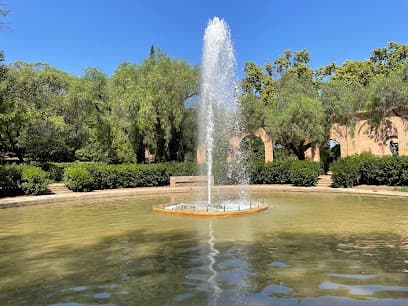
Located on the Passeig de Santa Madrona, just a stone's throw from the Archaeological Museum, this isn't a place that begs for your attention. It doesn't have a PR firm. It’s a relic of the 1929 International Exposition, a time when Barcelona was trying to prove to the world it was a modern European powerhouse. The Umbracle itself is a skeletal structure of brick and wood, designed to provide shade for plants that can’t handle the brutal Mediterranean sun. And flanking it are the brolladors—the fountains. They don't dance. They don't change color. They just flow, a steady, rhythmic pulse of water over stone that has been weathered by nearly a century of humidity and neglect.
Walking up here feels like stepping into a different version of Barcelona. The air is cooler, smelling of wet earth, pine needles, and the slow decay of autumn leaves. The design is the work of Jean-Claude Nicolas Forestier and Nicolau Maria Rubió i Tudurí, the guys who basically invented the landscape of modern Barcelona. They understood that a garden shouldn't just be a collection of plants; it should be a narrative. Here, the narrative is one of shadow and light. The brick slats of the Umbracle create a zebra-stripe pattern on the ground, and the water basins catch that light in a way that feels almost cinematic.
This is one of the best things to do in Montjuïc if you actually want to hear yourself think. You’ll see the occasional local walking a dog, or a student from the nearby theater school rehearsing lines in the shadows, but the tour buses don't stop here. They can't be bothered. There’s no gift shop, no overpriced cafeteria, just the sound of the water and the occasional squawk of a green parakeet. It’s the kind of place where you can sit on a stone wall, light a cigarette—if that’s your vice—and realize that the city below is a very long way away.
The Brolladors de l’Umbracle de Montjuïc worth it? Absolutely, but only if you value silence over spectacle. It’s a masterclass in Mediterranean landscaping, showing how water can be used not as a gimmick, but as a cooling, architectural element. The stone is covered in a fine velvet of moss, and the basins are often filled with fallen leaves, giving the whole place a sense of 'wabi-sabi'—the beauty of things imperfect, impermanent, and incomplete.
When you’re done soaking in the quiet, you can wander down toward Poble Sec for a glass of vermouth and some salty snacks. But for those twenty minutes you spend by the Umbracle, you’re in a Barcelona that doesn't care if you’re there or not. And honestly, that’s the best kind of place to be. It’s honest, it’s old, and it’s still standing, long after the neon lights of the Magic Fountain have been switched off for the night.
Type
Park
Duration
30-45 minutes
Best Time
Late afternoon for the best light through the Umbracle slats.
Features
Park
Categories
ArchitecturePark1929 ExpoLandscape Design
Ticket Prices
Free Admission
No tickets required
Opening Hours
- MondayOpen 24 hours
- TuesdayOpen 24 hours
- WednesdayOpen 24 hours
- ThursdayOpen 24 hours
- FridayOpen 24 hours
- SaturdayOpen 24 hours
- SundayOpen 24 hours
Must-See Highlights
The brick Umbracle structure
Tiered water basins
Views of the Archaeological Museum facade
Visitor Tips
Wear comfortable walking shoes as the terrain is uneven.
Combine this with a visit to the nearby Teatre Grec gardens.
Bring a book; it's one of the best quiet reading spots in the city.
Good For
Solitary wanderersArchitecture enthusiastsCouplesPhotographers
Why Visit
1929 International Exposition Heritage
Crowd-free Mediterranean tranquility
Masterpiece of Forestier landscape design
Nearby Landmarks
- Museu d’Arqueologia de Catalunya (2-minute walk)
- Teatre Grec (4-minute walk)
- Fundació Joan Miró (8-minute walk)
- Poble Espanyol (12-minute walk)
Accessibility
- Steep inclines
- Some stairs
- Limited wheelchair access due to hilly terrain
Location
Passeig de Santa Madrona, 25
Sants-Montjuïc, Barcelona
Nearby Hotels
Nearby Restaurants
In Sants-Montjuïc
ATTRACTION
Bolets1
Sants-Montjuïc
A gritty, earthy temple to the Catalan obsession with wild mushrooms, where the dirt is real, the fungi are seasonal gold, and the air smells like the damp floor of a Pyrenean forest.
0.0(0)
Tourist attraction
ATTRACTION
Montjuic aparca
Sants-Montjuïc
The unglamorous base camp for your Montjuïc assault. A tactical slab of asphalt where the city's chaos fades into the pine-scented ghosts of the 1992 Olympics.
0.0(0)
Tourist attraction
ATTRACTION
Паркінг Барселона
Sants-Montjuïc
A sprawling slab of industrial reality in the Zona Franca. No Gaudí here—just hot asphalt, diesel fumes, and the honest utility of a secure place to park your rig.
0.0(0)
Park
Frequently Asked Questions
Is Brolladors de l’Umbracle de Montjuïc worth visiting?
Yes, if you prefer quiet, historic architecture and lush gardens over crowded tourist attractions. It offers a peaceful glimpse into the 1929 International Exposition's landscape design without the crowds of the Magic Fountain.
How do I get to the Umbracle fountains?
The easiest way is to take the Metro to Espanya (L1/L3) and walk up through the Avinguda de la Reina Maria Cristina, or take the 55 or 150 bus which drops you closer to the Museu d'Arqueologia.
Is there an entrance fee for the Brolladors de l’Umbracle?
No, it is a public space located within the gardens of Montjuïc and is completely free to access 24/7, though it is best enjoyed during daylight hours.
What is the best time to visit?
Late afternoon is ideal. The sun hits the brick slats of the Umbracle structure, creating beautiful light patterns, and the temperature on the hill is much more pleasant than in the city center.
Reviews
0 reviews for Brolladors de l’Umbracle de Montjuïc
No reviews yet. Be the first to share your experience!