5.0
1 verified reviews
About
Barcelona isn’t all Gaudí tiles and overpriced sangria. If you want the truth, you have to head to the edges, to the places where the city’s ribs show. The Accés Baró de Viver al Parc Fluvial del Besòs is one of those places. It’s a gateway from a hard-scrabble, working-class neighborhood into a reclaimed environmental miracle. This isn't a 'must-see' for the cruise ship crowd, and that’s exactly why it matters. It’s a middle finger to the idea that a city has to be pretty to be important.
To get here, you take the L1 Metro to the end of the line’s northern reach. You step out into Baró de Viver, a neighborhood born from the 'Casas Baratas'—cheap housing built for the workers of the 1929 International Exposition. It’s a place that has fought for every inch of dignity it possesses. The access point itself is a functional ramp, a concrete umbilical cord that leads you down from the urban noise into the riverbed of the Besòs.
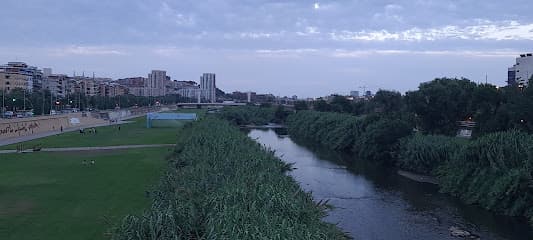
For decades, the Besòs was a toxic joke, one of the most polluted rivers in Europe, a chemical soup flowing between industrial warehouses. But the city did something right. They didn't just pave it over; they brought it back to life. Now, the Parc Fluvial del Besòs is nine kilometers of green defiance. Standing at the Baró de Viver access, you’re caught between two worlds. Above you, the Ronda de Dalt highway hums with the relentless, angry energy of a thousand commuters. Below you, the water flows over stones, and the reeds sway in the wind. It’s a surreal, industrial-pastoral landscape that feels like a scene from a film about the end of the world—or maybe the beginning of a better one.
This is one of the best parks in Barcelona for people who actually live here. You won't find influencers posing for selfies. You’ll find grandfathers in polyester tracksuits walking with a purpose, kids from the local blocks tearing up the asphalt on bikes, and serious runners who don't care about the view. The air smells of damp earth and river water, a sharp contrast to the diesel fumes just thirty feet above your head. In the distance, the iconic three chimneys of Sant Adrià de Besòs loom like the ruins of a forgotten civilization.
Is it beautiful? Not in the way the Park Güell is beautiful. It’s beautiful in the way a scar is beautiful—it tells a story of survival. It’s a place to walk, to think, and to realize that nature is a lot tougher than we give it credit for. If you’re looking for things to do in Sant Andreu that don't involve a shopping mall, this is it. It’s a long, straight shot of reality. You can walk for miles toward the sea, watching the herons and egrets hunt in the shallows, seemingly indifferent to the massive concrete bridges spanning their habitat.
The verdict is simple: if you need your travel experiences gift-wrapped and scented with lavender, stay in the Eixample. But if you want to see how a city heals itself, how a neighborhood reclaims its backyard, and how the 'other' Barcelona lives, walks, and breathes, then walk down this ramp. It’s free, it’s honest, and it’s a hell of a lot more interesting than another souvenir shop on La Rambla.
Type
Park
Duration
1-2 hours
Best Time
Late afternoon for the golden hour light on the river and to see the local neighborhood come alive with joggers and families.
Features
Park
Categories
NatureCyclingUrban ExplorationBird Watching
Ticket Prices
Free Admission
No tickets required
Opening Hours
- Monday8 AM to 6 PM
- Tuesday8 AM to 6 PM
- Wednesday8 AM to 6 PM
- Thursday8 AM to 6 PM
- Friday8 AM to 6 PM
- Saturday8 AM to 6 PM
- Sunday8 AM to 6 PM
Must-See Highlights
The view of the Sant Adrià Three Chimneys in the distance
The birdlife (herons and egrets) in the river shallows
The massive graffiti murals on the retaining walls
The contrast of the Ronda de Dalt highway bridges overhead
Visitor Tips
Bring water as there are no kiosks inside the riverbed area.
The park can be closed during heavy rain due to flood risks; check the weather before heading out.
Rent a bike in the city center and ride all the way here via the bike lanes for a great half-day trip.
Good For
CyclistsRunnersUrban explorersBudget travelersNature lovers
Why Visit
Industrial-Pastoral Contrast: Experience the unique juxtaposition of a restored river ecosystem directly beneath a major highway.
Authentic Local Vibe: One of the few places in Barcelona where you are guaranteed to be surrounded by locals rather than tourists.
Environmental Success Story: Witness the incredible recovery of what was once one of Europe's most polluted waterways.
Nearby Landmarks
- Baró de Viver Metro Station (2-minute walk)
- Westfield La Maquinista Shopping Centre (15-minute walk)
- Pont de Santa Coloma (10-minute walk)
- Three Chimneys of Sant Adrià (45-minute walk along the river)
Accessibility
- Ramp access for wheelchairs
- Paved paths suitable for mobility scooters
- Flat terrain along the riverbed
Location
Sant Andreu, Barcelona
Nearby Hotels
Nearby Restaurants
In Sant Andreu
ATTRACTION
Camsbio,S.L
Sant Andreu
Not a park for picnics, but the workshop where Barcelona’s green future is built. Camsbio is the grit behind the city's vertical gardens and bio-construction.
0.0(0)
Park
ATTRACTION
Multan los Domingos
Sant Andreu
A defiant slice of Sant Andreu where industrial ruins meet community gardens. It’s the anti-tourist Barcelona: raw, brick-heavy, and smelling of vermut and rebellion.
0.0(0)
Garden
ATTRACTION
Plaça d'Albert Badia i Mur
Sant Andreu
A gritty, honest slice of Sant Andreu where the 'Cases Barates' history meets modern life. No Gaudí here—just real people, a playground, and the unvarnished soul of Bon Pastor.
0.0(0)
Park
Frequently Asked Questions
Is the Parc Fluvial del Besòs worth visiting?
Yes, if you want to see a unique side of Barcelona's urban transformation. It's a 9km green corridor perfect for long walks or cycling, offering a stark, industrial-natural beauty far from the tourist crowds.
How do I get to the Baró de Viver access?
Take the L1 (Red Line) Metro to the Baró de Viver station. The access ramp to the river park is just a short walk from the station exit, clearly marked and accessible for bikes and pedestrians.
Is it safe to walk in the Besòs River Park?
Generally, yes. It is a popular spot for local families, runners, and cyclists. However, like any urban park on the city's edge, it's best to visit during daylight hours when there are plenty of people around.
Are there facilities like toilets or cafes in the park?
Facilities are very limited within the riverbed itself. You should bring water and snacks. For cafes and restrooms, you'll need to head back up into the Baró de Viver or Sant Andreu neighborhoods.
Reviews
0 reviews for Accés Baró de Viver al Parc Fluvial del Besòs
No reviews yet. Be the first to share your experience!